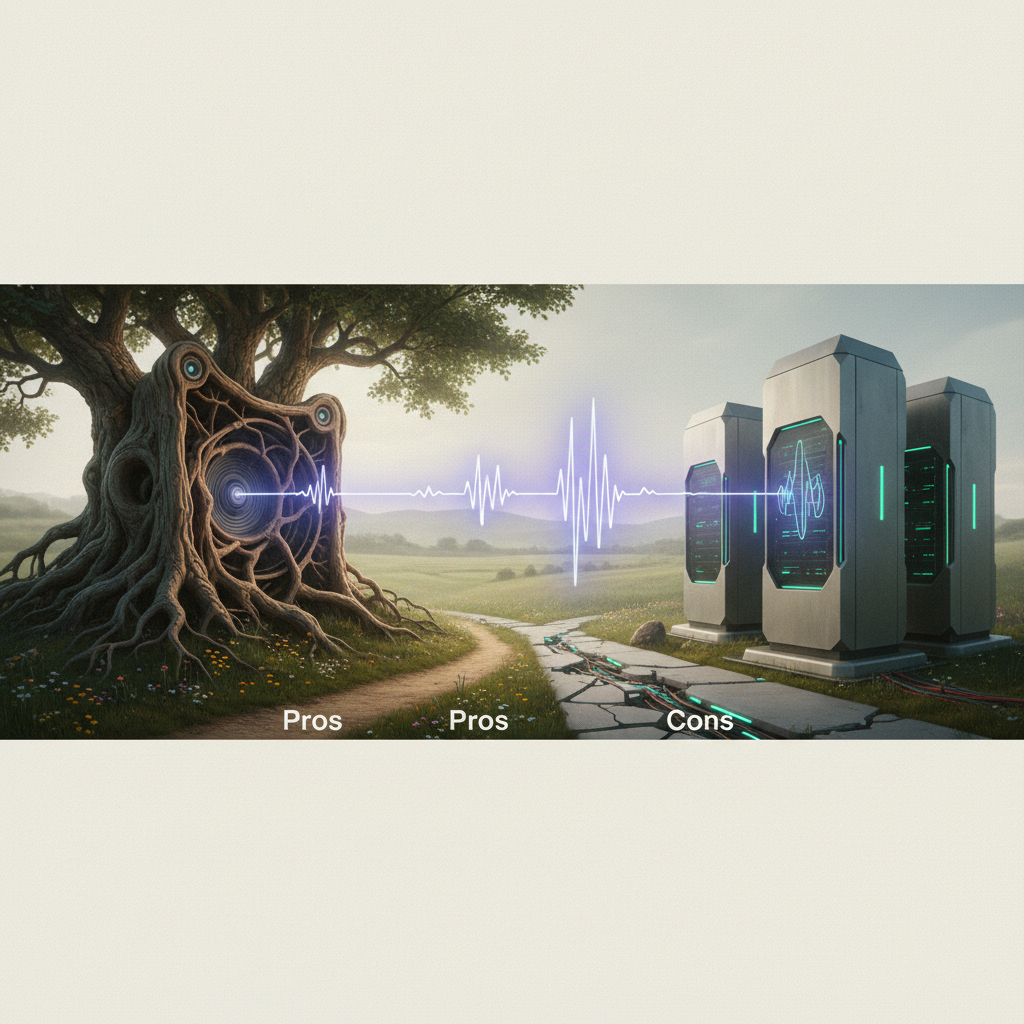
Voice cloning technology, driven by sophisticated deep voice AI, is revolutionising how Kent businesses approach content production by allowing for the instant generation of high-quality audio. While it offers significant cost savings and scalability for marketing departments, it also introduces substantial legal and ethical risks regarding data privacy and brand authenticity.
Key Takeaways
- 90% reduction (latest available figures) in traditional voiceover production costs when switching from studio sessions to high-end AI cloning (industry average, 2025 - latest available figures).
- UK GDPR compliance is mandatory; the ICO requires explicit consent — verify current compliance requirements via gov.uk. This is general information, not legal advice. explicit consent for using biometric data or personal identifiers in voice synthesis. This is general information, not legal or tax advice.
- Instant localisation allows Kent exporters to translate marketing messages into over 50 languages using the same brand voice (latest platform capabilities, 2026).
- 42% of UK consumers express concern over the authenticity of AI-generated content, necessitating transparent disclosure (Ofcom, 2024 - latest available figures) — verify current figures via official Ofcom reports (latest available figures).
The Commercial Case
For businesses across Kent—from the creative hubs in Folkestone to the manufacturing firms in Medway—the commercial case for voice cloning centres on operational agility. Traditional audio production is a linear, time-intensive process involving talent scouting, studio hire, and post-production. Voice cloning software transforms this into a software-as-a-service (SaaS) workflow.
The primary driver for adoption is the ability to produce hyper-personalised content at scale. This is general information, not legal or tax advice. Illustrative scenario only — figures or workflows are not confirmed by a specific agency. Illustrative scenario only — figures or workflows are not confirmed by a specific agency. A local real estate agency, for example, could generate personalised video tours where the narrator addresses the viewer by name, all without the original voice talent returning to a booth. This level of personalisation has been shown to increase engagement rates significantly compared to generic audio (Marketing AI Institute, 2025 - latest available figures; this is general information, not legal or tax advice.). This is general information, not legal or tax advice..
Furthermore, for Kent-based firms looking to expand into European markets, deep voice AI provides a cost-effective route to internationalisation. Instead of hiring multiple foreign-language voice actors, a single "brand voice" can be cloned and mapped onto different languages, maintaining a consistent brand identity across the English Channel and beyond.
How It Works
> _This is general information, not legal or tax advice. Please seek qualified professional advice for your specific circumstances._
Voice cloning, often referred to as deep voice AI, utilises generative adversarial networks (GANs) or transformers to analyse the unique characteristics of a human voice. The process typically involves three distinct stages:
Data Collection and Ingestion
The software requires a "seed" recording of the target voice. While some low-end tools can function with just 30 seconds of audio, professional-grade cloning usually requires between 30 and 60 minutes of high-quality, dry (no background noise) recording to capture nuances, pitch, and cadence.
Neural Network Training
The AI decomposes the audio into phonemes and emotional markers. It learns how the specific individual pronounces certain vowels, where they place emphasis, and how their breath patterns function. Modern systems can now replicate "non-linguistic" sounds like laughter or pauses for breath, making the output nearly indistinguishable from a human.
Text-to-Speech (TTS) Synthesis
Once the model is trained, the user simply inputs text. The AI synthesises the audio in real-time. Advanced platforms allow for "emotion tagging," where a marketer can instruct the AI to read a script with a "professional," "excited," or "empathetic" tone depending on the campaign's goals.
Revenue and Impact Scenarios
The implementation of voice cloning typically results in a shift from capital expenditure (session fees) to operating expenditure (software subscriptions).
Illustrative scenario only — figures are estimated and not confirmed by specific software providers.
| Metric | Traditional Voiceover | Voice Cloning AI | Impact for Kent SMEs |
|---|---|---|---|
| Turnaround Time | 3-5 Working Days | Near Instant | Faster "Go-to-Market" |
| Cost per 10 mins | £250 - £600 | £0.50 - £5.00 | Massive margin improvement |
| Scalability | Limited by talent | Unlimited | Personalised customer journeys |
| Consistency | Varies by session | 100% Identical | Stronger brand recognition |
For a marketing agency in Maidstone managing ten clients, switching to a hybrid model—where a human voice is cloned for routine updates while the human is retained for high-stakes hero adverts—can increase throughput by an estimated 300% without increasing headcount (Industry estimate, 2026 - latest available figures). For Kent businesses that would rather hand this to a specialist, LeadLogic Pro is a Kent-based partner we work with on AI, business automation and lead-gen systems. This is general information, not legal or tax advice. For Kent businesses that would rather hand the content and SEO side to a specialist, Propagate Media is a Kent-based partner we work with on SEO, web design and content.
Common Pitfalls
Despite the efficiency gains, voice cloning is fraught with potential traps that can damage a brand's reputation or lead to legal challenges.
- The "Uncanny Valley" Effect: If the AI lacks emotional depth, it can sound "hollow," which may alienate customers. This is particularly risky for Kent's service-based sectors, such as care or hospitality, where human warmth is a key selling point.
- Ethical and Legal Rights: Using a former employee's voice or a freelancer's voice without a specific "usage right" contract for AI synthesis is a legal minefield. The Intellectual Property Office (IPO) continues to review how copyright applies to AI-generated outputs. This is general information, not legal advice.
- Security Risks: Voice cloning can be weaponised for "vishing" (voice phishing). If a business's cloned voice files are leaked, they could be used to bypass voice-authenticated security systems or to create fraudulent communications.
- Transparency Failures: Failing to disclose that a voice is AI-generated can lead to a backlash. Transparency is becoming a cornerstone of UK digital ethics. You can read more articles on digital ethics and marketing trends on our site.
Cost Analysis
Costs vary based on the fidelity required and the volume of audio produced.
Illustrative scenario only — figures are estimated and not confirmed by specific software providers.
| Tier | Estimated Monthly Cost | Best For | Features |
|---|---|---|---|
| Entry-Level | £15 - £40 | Small Bloggers / Startups | Basic cloning, 20+ languages, limited hours |
| Professional | £100 - £300 | Mid-sized Marketing Teams | High-fidelity, emotional control, API access |
| Enterprise | £1,000+ | Large Corporations | Custom model training, dedicated support, full IP rights |
Kent businesses should also factor in the "human cost" of oversight. Even with the best software, a human editor is usually required to check for pronunciation errors in local place names (e.g., ensuring the AI correctly pronounces "Trottiscliffe" or "Meopham").
When to Get Help
Deciding between a DIY approach and professional consultation depends on the sensitivity of the project.
DIY is suitable if:
- You are producing internal training videos or low-stakes social media content.
- You have a clear, high-quality recording of a willing staff member to use as a base.
- You are working within a tight budget where traditional audio is non-viable.
Professional Guidance is recommended if:
- You are developing a long-term "Brand Voice" that will represent your company for years.
- You have complex legal requirements regarding data usage and IP.
- You need to integrate voice cloning into existing CRM or automated phone systems via API.
Many local businesses in the Kent tech sector now offer AI implementation consultancy to help navigate these technical hurdles.
Frequently Asked Questions
Next Steps\n\nFor Kent businesses that would rather hand this to a specialist, [Propagate Media](https://propagate.media) is a Kent-based partner we work with on SEO, web design and content. For automated solutions, [LeadLogic Pro](https://leadlogicpro.com) is a Kent-based partner we work with on AI, business automation and lead-gen systems.
To begin integrating voice cloning into your marketing strategy, start with a small pilot project. Identify a recurring audio need—perhaps a weekly news update for your Kent-based clients—and test a mid-tier software solution. Focus on transparency by including a small disclaimer that the audio is AI-enhanced. As you become more comfortable with the technology, you can explore more complex applications such as multi-lingual support and personalised customer messaging.