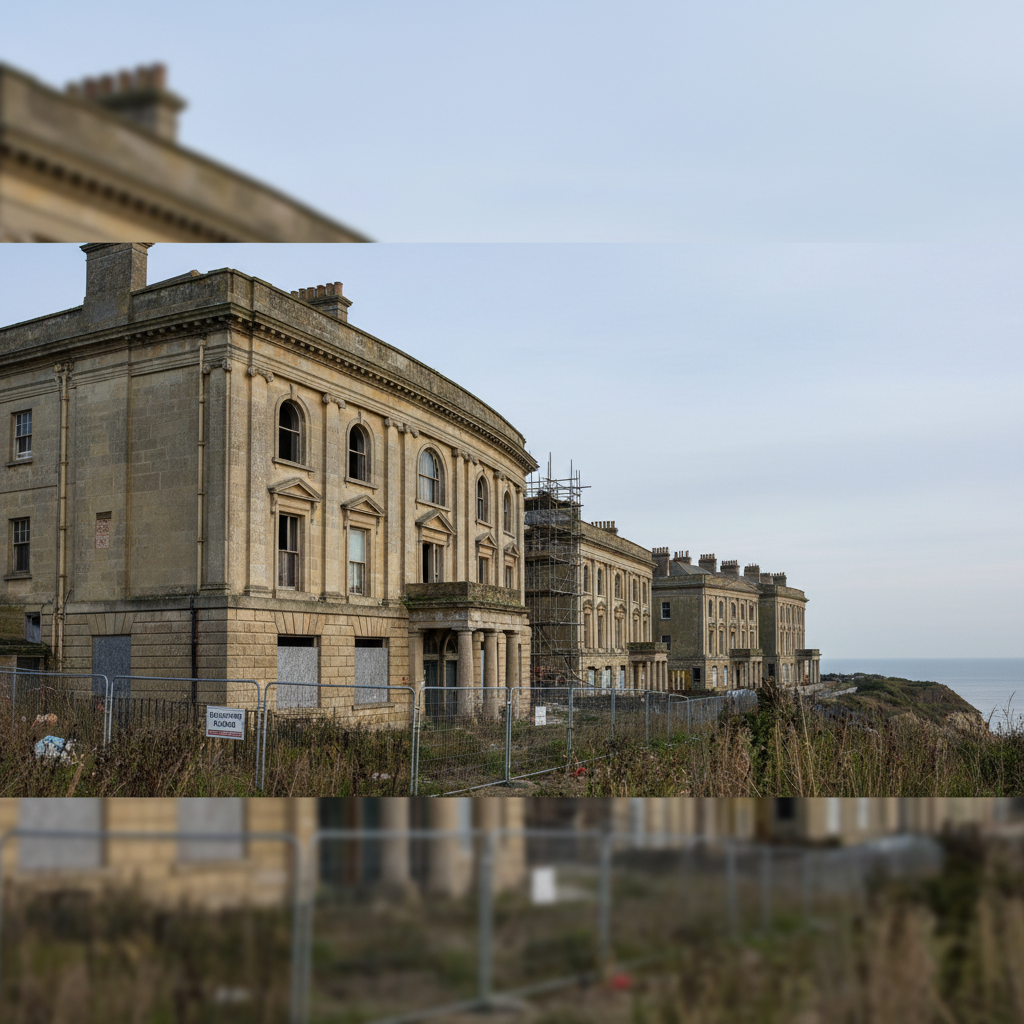
The historic Nayland Rock Hotel in Margate, famously associated with Mick Jagger, is poised for a £20 million transformation into luxury residential apartments. This development signals a significant shift in the Thanet commercial property landscape, prioritising high-end housing over traditional seaside hospitality in a bid to revitalise the Royal Crescent area.
Key Takeaways
- The proposed £20 million redevelopment aims to convert the landmark hotel into approximately 50 residential units (Thanet Planning Portal, 2026) — verify current status via the planning portal..
- This project reflects a broader trend in Kent commercial property where underperforming hospitality assets are repurposed for the residential market (ONS, 2025 (latest available figures)). This is general information, not legal or tax advice — seek qualified professional advice.
- Preservation of the building’s Grade II listed facade remains a critical requirement for planning approval and heritage conservation.
- Local economic impact is expected to shift from tourism-based seasonal revenue to year-round residential spending within the Margate economy.
The Commercial Case
The decision to transition the Nayland Rock Hotel from a hospitality asset to a residential development is rooted in the evolving economic dynamics of the North Kent coast. While Margate has enjoyed a cultural renaissance over the last decade, the operational costs of maintaining large, Victorian-era hotel structures have become increasingly prohibitive for many independent operators.
From a commercial property perspective, the Royal Crescent occupies a prime position. The site offers panoramic views of the main sands and proximity to the Turner Contemporary, making it blue-chip real estate for the "London-on-Sea" demographic. Investors are increasingly favouring residential conversions because they offer more predictable long-term yields compared to the volatility of the UK seaside tourism sector.
Furthermore, the "Jagger factor"—the building's historical link to the Rolling Stones frontman—adds a unique marketing provenance that can command a premium in the luxury flat market. By converting the existing 19th-century structure, developers can tap into the high demand for period properties while bypassing the complexities of securing greenfield sites in protected coastal areas.
How It Works
The conversion of a Grade II listed hotel into residential flats is a multi-stage technical process governed by strict UK planning laws and building regulations. The developer must navigate the National Planning Policy Framework (NPPF), specifically sections relating to the conservation of the historic environment. This is general information, not legal or tax advice — seek qualified professional advice.
First, a "Change of Use" application must be submitted to Thanet District Council. This involves demonstrating that the loss of hotel beds will not detrimentally impact the local tourism economy, or arguing that the economic benefits of residential occupation outweigh the loss of visitor accommodation.
Architecturally, the process involves internal reconfiguration to create self-contained units while ensuring that "significant" historic features—such as original staircases, cornicing, and the iconic external masonry—are preserved or restored. Modern requirements for thermal efficiency and soundproofing must be integrated sensitively into the 19th-century fabric, often requiring bespoke engineering solutions that do not alter the building's profile.
Revenue and Impact Scenarios
> Illustrative scenario only — figures are not professional valuations and are not confirmed by the named business or developer.
The financial viability of the Nayland Rock redevelopment depends on the mix of units and the state of the Kent housing market at the point of completion.
| Scenario | Estimated Unit Count | Projected Market Value (Avg) | Total Gross Development Value (GDV) |
|---|---|---|---|
| :--- | :--- | :--- | :--- |
| Luxury Focus | 35 Large Apartments | £550,000 | £19.25 Million |
| Mixed Market | 50 Standard Units | £380,000 | £19.00 Million |
| High Density | 65 Studio/1-Bed | £275,000 | £17.80 Million |
Beyond the immediate sale values, the impact on the Margate economy is multifaceted. A residential population provides a consistent, year-round customer base for businesses in the Old Town and Cliftonville, reducing the "seasonal slump" experienced by many Kentish seaside towns. However, the loss of hotel capacity can reduce the town's ability to host large-scale events or conferences, potentially affecting the events sector in the wider Thanet region.
Common Pitfalls
Redeveloping historic coastal assets in Kent is fraught with specific risks that can derail even the most well-funded projects.
Listing Restrictions: As a Grade II listed building, any internal or external modification requires Listed Building Consent. Disagreements with conservation officers regarding window replacements or internal wall removals can lead to significant delays and increased costs.
Coastal Erosion and Maintenance: Buildings on the Margate seafront are exposed to harsh salt air and high winds. The long-term maintenance costs for the facade can be substantial, and developers must ensure that the building's envelope is sufficiently protected during the construction phase.
Public Opposition: Local residents often hold strong sentimental attachments to landmark hotels. Concerns regarding the loss of heritage, the lack of affordable housing within the scheme, or the pressure on local infrastructure can lead to organised planning objections.
Discovery of Structural Defects: Victorian hotels often hide "legacy" issues, ranging from lead piping and asbestos to subsidence from historic coastal shifts. These often only become apparent once the "strip-out" phase begins, frequently requiring contingency budgets of 15-20%.
Cost Analysis
> Illustrative scenario only — figures are not professional valuations and are not confirmed by the named business or developer.
> _This is general information, not legal or tax advice. Please seek qualified professional advice for your specific circumstances._
A project of this scale requires a diverse capital stack, including land acquisition, professional fees, and high-spec construction costs.
| Expense Category | Estimated Allocation | Notes |
|---|---|---|
| :--- | :--- | :--- |
| Land/Building Acquisition | £4,500,000 - £6,000,000 | Based on current Margate commercial valuations. |
| Construction & Restoration | £10,000,000 - £12,000,000 | High costs due to listed status and specialist materials. |
| Professional & Legal Fees | £1,500,000 | Includes architects, heritage consultants, and planning. |
| Marketing & Disposal | £500,000 | Branding, show homes, and agency commissions. |
| Total Estimated Budget | £16.5m - £20m | Excluding financing costs and VAT recovery. |
For smaller investors looking at similar opportunities in the businesses directory, it is vital to note that VAT on residential conversions of this nature can sometimes be reduced to 5%, provided specific criteria are met under HMRC Notice 708 (Note: This is general information, not tax advice — seek qualified professional advice).
When to Get Help
Navigating the Kent commercial property market, particularly regarding heritage assets, requires a multi-disciplinary approach. Developers should seek professional advice at the pre-acquisition stage.
1. Planning Consultants: Essential for navigating the specific requirements of the Thanet Local Plan and national heritage guidelines.
2. Heritage Architects: To ensure that design proposals are sympathetic to the building's history while meeting modern living standards.
3. Commercial Surveyors: To provide accurate valuations and "Red Book" reports for securing development finance from UK lenders.
4. Specialist Contractors: Firms with a proven track record in Kentish coastal restoration are vital for managing the unique environmental challenges of the site.
For those interested in the broader implications for the region, keeping an eye on our blog for updates on local planning decisions is highly recommended.
Frequently Asked Questions
Next Steps
The redevelopment of the Nayland Rock Hotel represents a pivotal moment for Margate’s seafront. For investors and local stakeholders, this project serves as a barometer for the strength of the high-end residential market in East Kent.
If you are interested in exploring similar opportunities or want to connect with the firms involved in Kent's urban regeneration, please visit our businesses section to find accredited local professionals. For Kent businesses that would rather hand this to a specialist, Propagate Media is a Kent-based partner we work with on SEO, web design and content. Stay informed on the latest planning updates by subscribing to our newsletter or attending upcoming events focused on the Kent property sector.