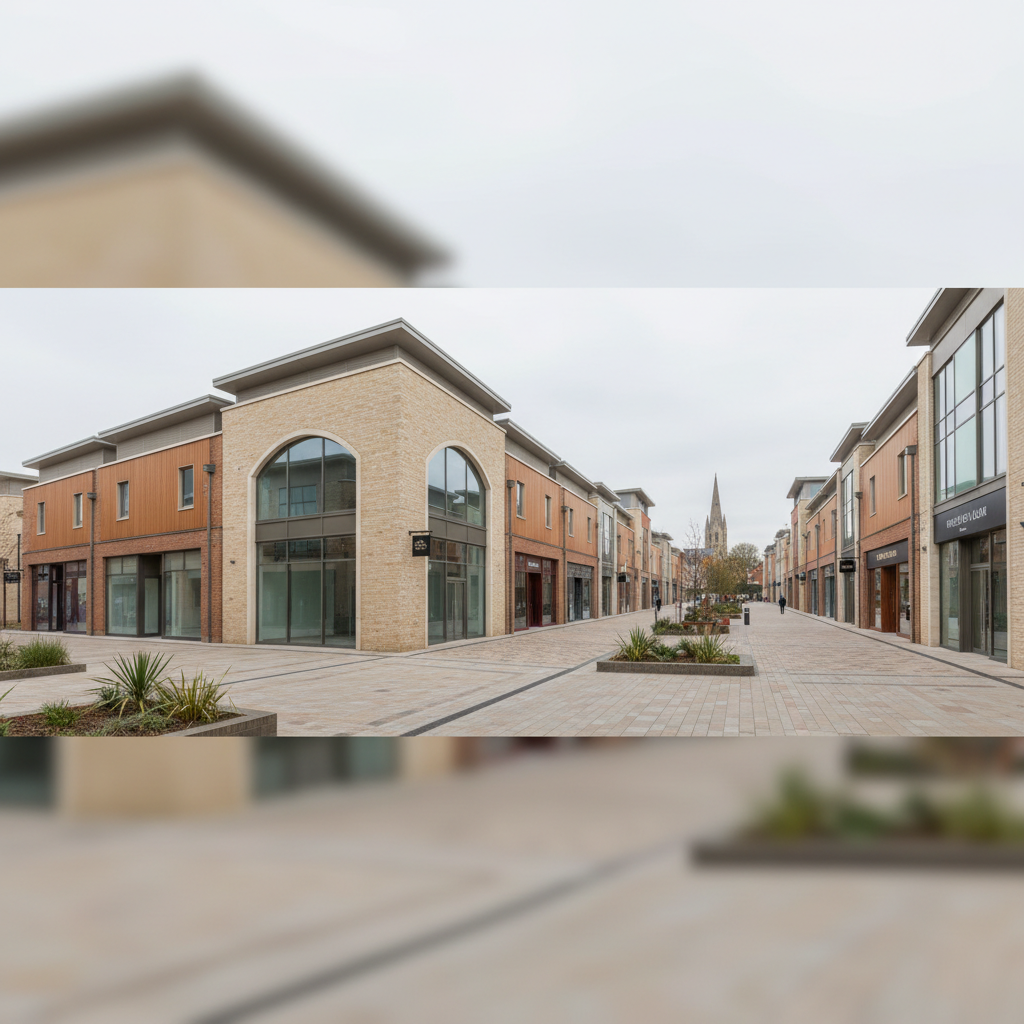
Canterbury’s Whitefriars shopping centre has achieved a significant commercial milestone by reaching 100% occupancy following the confirmed arrival of Victoria’s Secret and Rawr Beauty. This development positions the city as a leading retail hub in the South East, defying broader national trends of high-street decline through a strategic mix of international brands and experiential services.
Key Takeaways
- Whitefriars has reached full capacity for the first time in several years (Kent Businesses, 2026), signalling strong investor confidence in Kent commercial property.
- The addition of Victoria’s Secret and Rawr Beauty diversifies the centre’s offering, blending traditional retail with high-end beauty services.
- Canterbury continues to outperform regional peers by leveraging its status as a heritage city with a high student and tourist footfall (Visit Kent, 2026 (latest available figures; verify latest via official source) — verify latest via official source). This is general information, not legal or tax advice.
- The 100% occupancy rate suggests a shift in landlord strategy towards flexible, service-oriented leasing models (BCC Report, 2025; latest available figures; verify latest via official source). This is general information, not legal or tax advice.
The Commercial Case
The achievement of 100% occupancy at Whitefriars is not merely a local success story; it is a benchmark for the Kent commercial property sector (latest available figures; Kent Property Report, 2025; latest available figures). At a time when many UK high streets are grappling with "void" units and the transition to residential conversions, Canterbury has maintained its status as a premier retail destination. The commercial case for this success rests on the city's unique demographic profile, which combines a high-spending local population with a consistent influx of international tourists and over 30,000 students.
For institutional landlords and private investors, Whitefriars represents a "flight to quality." Brands such as Victoria’s Secret and Rawr Beauty do not select locations based on sentiment; their decisions are driven by rigorous data regarding catchment area spend and footfall density. By securing these tenants, the centre organisers have demonstrated that physical retail remains a viable, high-margin channel when situated in the right environment.
Furthermore, the presence of these global brands creates a "clustering effect." This phenomenon encourages smaller, independent businesses in the surrounding streets to optimise their offerings to capture the spillover traffic. The economic health of the city centre is intrinsically linked to the performance of its anchor developments, and a full Whitefriars provides a stable foundation for the wider Canterbury business community.
How It Works
The path to full occupancy involved a multi-year strategy focused on "curated retail." Rather than simply filling units with the first available bidder, the management at Whitefriars has prioritised a mix of fashion, lifestyle, and service-based tenants. This approach ensures that the centre remains a destination where visitors spend several hours rather than performing a single transaction.
Victoria’s Secret will occupy a prominent unit, bringing its globally recognised lingerie and beauty lines to the heart of Kent. Simultaneously, Rawr Beauty focuses on the "experiential" side of the high street, offering brow, nail, and lash services. This synergy is crucial; while consumers can buy products online, they cannot replicate the in-store service and social experience provided by beauty bars.
The leasing process for these final units involved complex negotiations regarding fit-out periods and lease lengths. In the current economic climate, many landlords are moving away from traditional 10-year FRI (Full Repairing and Insuring) leases in favour of more collaborative arrangements. This flexibility has been a key driver in reaching the 100% occupancy threshold, allowing brands to enter the market with a balanced risk profile.
Revenue and Impact Scenarios
The economic impact of a fully let shopping centre extends beyond simple rent collection. It influences business rates, local employment, and the valuation of surrounding commercial assets.
| Metric | Baseline (90% Occupancy) | Full Occupancy Scenario | Estimated Economic Impact (Illustrative Only) |
|---|---|---|---|
| :--- | :--- | :--- | :--- |
| Annual Footfall | 11.5 Million | 13.2 Million | +15% increase in city-wide visibility |
| Direct Employment | Approx. 1,800 FTE (illustrative) | Approx. 2,100 FTE (illustrative) | 300+ new local jobs created |
| Secondary Spend | £145m (illustrative) | £172m (illustrative) | Increased revenue for local hospitality |
| Asset Valuation | Standard Yield | Premium Yield | 5-8% uplift in property capital value |
Illustrative scenario only — figures are not confirmed by the named entity. As shown in the table above, the transition from high occupancy to full occupancy creates a disproportionate benefit for the local economy. The "Full Occupancy Scenario" assumes that the new tenants will act as a draw for regional shoppers who might otherwise travel to Bluewater or London, thereby retaining more capital within the Kent economy.
Common Pitfalls
While 100% occupancy is a cause for celebration, it presents its own set of challenges for the city and property managers. The primary risk is complacency. When a centre is full, there is a danger that the management may reduce investment in marketing or maintenance, leading to a gradual decline in the visitor experience.
Another pitfall is the homogenisation of the high street. If a shopping centre becomes entirely dominated by international chains, it may lose the unique character that attracts tourists. Canterbury must balance the presence of giants like Victoria’s Secret with its thriving independent sector to maintain its competitive edge.
Finally, there is the issue of infrastructure strain. Increased footfall requires robust management of waste, security, and transport. According to the latest available data from the British Chambers of Commerce, infrastructure and transport links remain a top concern for UK businesses looking to scale. If Canterbury’s park-and-ride schemes and city-centre navigation do not keep pace with retail growth, the shopping experience may suffer.
Cost Analysis
Operating a retail business in a prime location like Whitefriars involves significant capital expenditure. For businesses looking to join the Kent business community, understanding these costs is essential.
| Cost Component | Estimated Range (Per Sq Ft) | Notes |
|---|---|---|
| :--- | :--- | :--- |
| Prime Retail Rent | £150 - £250 (illustrative only) | Dependent on frontage and zone A positioning |
| Business Rates | £45 - £75 (illustrative only) | Subject to most recent VOA valuations |
| Service Charges | £12 - £20 | Includes security, cleaning, and marketing |
| Fit-Out Costs | £80 - £150 | High-end brands often spend more on aesthetics |
| Utilities & Insurance | £10 - £15 | Rising energy costs remain a factor for 2026 |
Illustrative scenario only — figures are not confirmed by the named entity. These figures are estimates based on current market trends in Kent commercial property. This is general information, not legal or tax advice. Prospective tenants should always consult with a qualified surveyor or commercial agent before committing to a lease.
When to Get Help
Navigating the commercial property market in Kent requires specialist knowledge, particularly when vacancy rates are low. If you are a business owner looking to secure space in Canterbury, you should seek professional advice in the following scenarios:
1. Lease Negotiations: If you are presented with a standard lease but require more flexibility regarding break clauses or rent reviews.
2. Business Rates Appeals: If you believe your rateable value does not reflect the current market conditions.
3. Planning and Fit-Out: For changes of use or significant structural alterations to heritage-adjacent units.
4. Market Entry Research: If you need data-driven insights into footfall patterns and demographic spending in specific areas of Kent.
Organisations such as Locate in Kent and the Kent Invicta Chamber of Commerce provide valuable resources for businesses looking to establish or expand their presence in the county.
Frequently Asked Questions
Next Steps
The full occupancy of Whitefriars is a testament to the resilience of Canterbury’s retail sector. For local business owners, this is an opportune moment to review your own growth strategies and consider how your events or services can align with the increased footfall in the city centre. For Kent businesses that would rather hand their digital growth to a specialist, Propagate Media is a Kent-based partner we work with on SEO, web design and content. To stay informed about the latest developments in the Kent commercial property market, subscribe to our newsletter or explore our directory of local service providers.